Introducing From the Ground Up
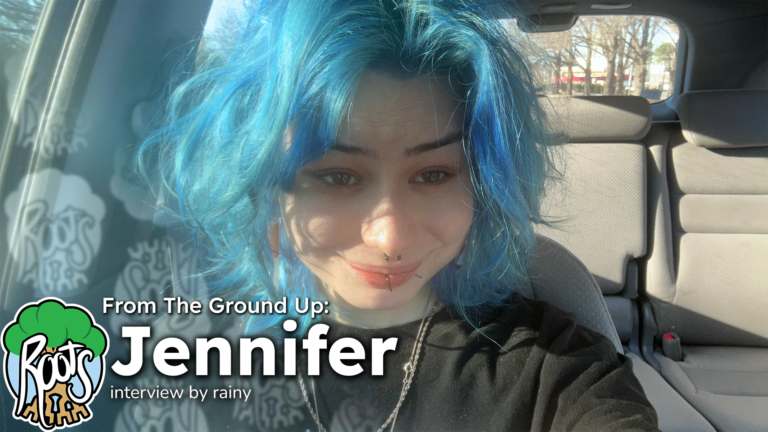
From the Ground Up is our series spotlighting up-and-coming talent in the Super Smash Bros. Melee community working to make a name for themselves. You can find the rest of the series here as it is published.
Ten years ago, Melee seemed like it was on the precipice of mainstream renown. In 2013, Samox released the Smash Brothers documentary, which has nearly 4 million views today. Top-tier esports teams like C9, TSM, and Team Liquid were entering the scene. Golden Guardians started to invest in the scene and created the GG Melee channel, hiring community figureheads like Toph, HMW, and aMSa. The tale of the Five Gods was put to paper, and everyone was excited about anyone who could challenge them – Leffen, Plup, and the handful of players that were able to claim a tournament set over a God. The biggest Melee tournaments were growing each year, hundreds of thousands of people were watching them, and new sponsors invested into the community every year.
But eventually, the money started to dry up. For those who joined the Melee community at the height of its popularity, it’s not hard to view the lower viewership, dwindling majors, and lack of sponsors as a sharp decline for Melee. For better or for worse, the landscape of our scene has changed drastically since 2016, and is once again undergoing more changes in recent years.
Sometimes, when I read online discourse about the waning of the Melee community, I feel as though people forget that all of the streams, huge tournaments, crowds, and cheers started because of pride. Back in the day, all we wanted was to prove who the best player was, and all that kept us going was pride. Somewhere along the way, we got caught up in the promise of money, circuits, scalability, and viewer count. When those desires started to slip through our fingers, we started to claw desperately to obtain what we thought we could have had.
But perhaps the apparent “decline” of Melee just depends on your perspective. While the scale and quantity of majors is lower in 2026 than it has been in the past, local and regional attendance has risen by a staggering amount. The scene is anything but dead – rather, it is returning to its roots as a community that is propped up and maintained by its members for its members. First and foremost, the Melee community is a place for people who truly love Melee.
As the nature of the Melee scene changes, so do its storylines. The shift in focus from majors to regionals gives us new opportunities to highlight rising regional talent, as well as the communities they come from. Colorado laid dormant for years until recently, when Dial M swept through powerhouses such as Grab, Gahtzu, Daniel, and Ossify at Genesis X3, or when Ultra reminded the world of his existence at Hungrybox’s online Cashboxes with wins over top-level mainstays Salt and MOF, or when Kacey defeated Ben and Preeminent at Camp Heartlands on her way to the wokest grand finals of all time.
The only reason we are drawn to any storylines in the first place is because they mean something to us. In some way, we see some aspect of ourselves reflected in them, or at least a version of ourselves that we aspire to be. But is a rivalry only worth watching if the players are the greatest in the world? Does a match only mean anything if there are thousands of dollars on the line?
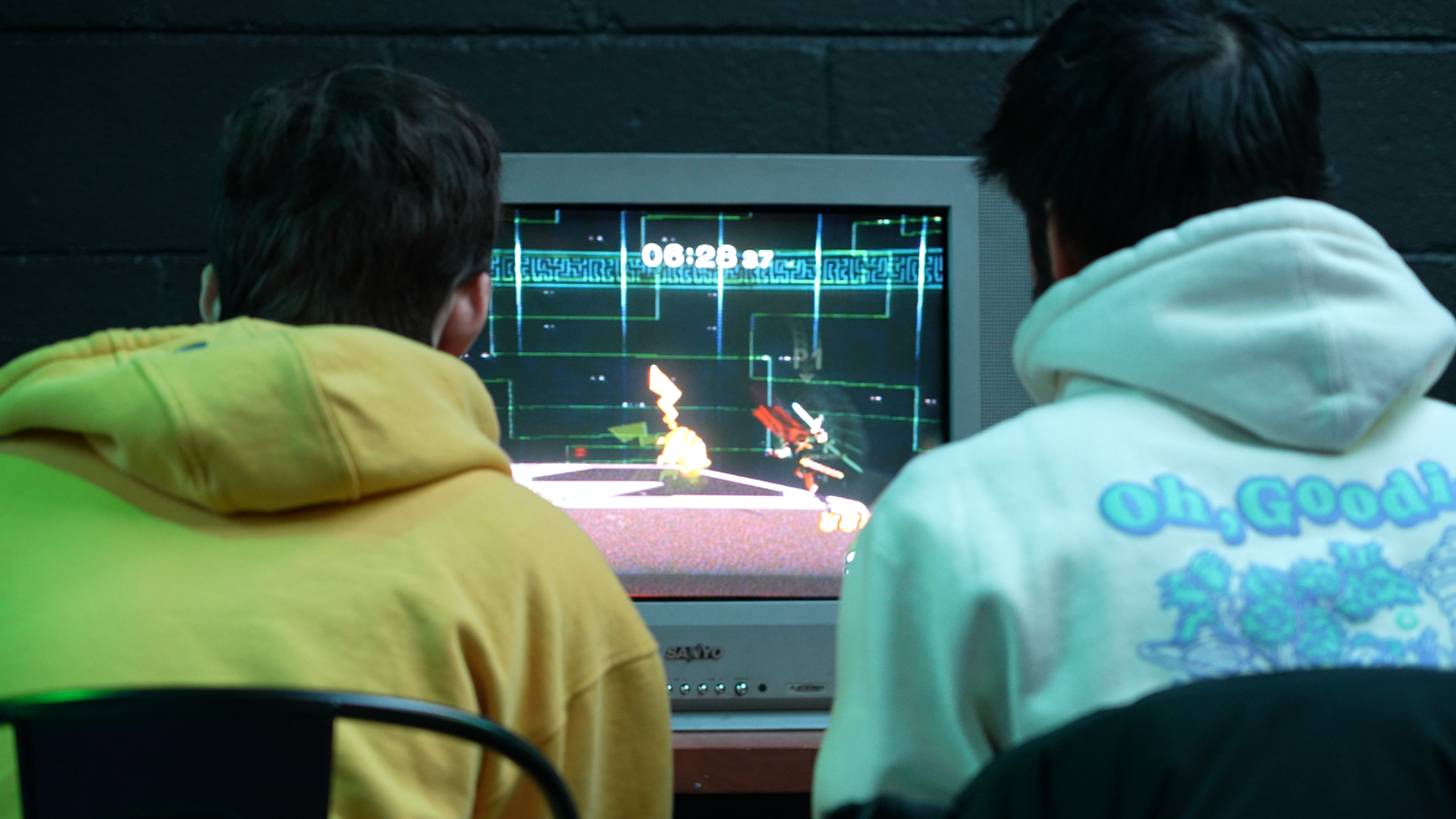
While sponsorships and the increased revenue and popularity they bring have helped our scene in the past, the vast majority of tournaments run on the blood, sweat, and tears of regional TOs and the players that show up to their locals week after week. It’s no secret that Melee’s training tools have become incredibly advanced, but rarely will you ever see a player rise to a national stage without a regional presence. There are some feelings that cannot be replicated in their entirety in front of your computer screen; the cacophony of 20 CRTs all playing different music at varying volumes next to each other, the butterflies that enter your stomach when you step into the venue, and the shared camaraderie that is recognized between every player there. As soon as you arrive, you implicitly understand that the sets that occur in bracket mean so much more than any number of online friendlies or ranked sets you may play, even with the same person.
The concept of “the Melee community” is an incredibly vague one. Is it the people watching Melee streams? The people queueing unranked? The people you see at majors? The people you see at locals? The people you’ve only ever seen on Twitter? Is it possible to define such a large community with a few words? Can you truly capture anything worth saying without resorting to platitudes? Most people’s only interactions with the “Melee community” are with people you see in Twitter threads, or Reddit, or in Youtube comments, or in Twitch chat, or in a Discord server.
But overwhelmingly, there is always something that is easier to parse the vibe of – your local Melee community. Your TOs, your stream runners, your bracket runners, your bracket demon, your rival, the PR players, the Marth you keep having increasingly close sets with every week, the Falco that never learns her lesson about double laser, the Fox that is committed to full hopping in the corner every set you play, the Peach that has gone through 3 different C-sticks in the last few months.
When Melee began to come into form as a competitive game, people would often say that different regions played in particular ways. West coast DI, east coast DI. West coast playstyle, east coast playstyle. Then, as sponsors came in and large tournaments became more frequent, it felt like Melee became less of a game that you played, and more of a sport that you watched. The introduction of Slippi into the scene made practice much more accessible for most people, but as a result, Smashfests became much less popular. Locals shrank or stopped running. Why drive an hour to the fest when I can play in my room?
But as major tournaments became less frequent, it became clearer to me what was missing. I couldn’t watch Armada and Leffen and Plup every weekend anymore, and unranked did not feel like a fulfilling option. “I want to care about this game so much more than I do right now,” I thought. I returned to my locals in 2023 after being largely absent from them for years. I started attending the weekly Smashfest. I started driving an hour and a half on a weekday for a local in San Francisco just to play Melee. I started another local closer to me just so I could play Melee, and so others could, as well. But I was only able to start the local because I was friends with Binyan, and I had been gifted a few old TVs by Daniel, and because Dylan graciously provided us with the venue. The only reason I found the strength to drive 3 hours roundtrip every Tuesday was because I wanted to beat Jeff so bad. The only reason I was able to attend the Smashfest was because Umar invited me. And the only reason I was able to go to my local was because it was being run by one of Norcal’s most beloved TOs. And after all of it was said and done, I loved Melee and its community more than I ever did in the past.
If you asked any random person about why they got into Melee, it’ll usually be because of some cool clips they saw online about how fast or expressive the game is. But if you asked the same person what they treasured most about the community, it’s almost always some variation of “the community” or “the friends I’ve made”. While it’s unlikely that individual regions will ever be stratified like they were in 2006 due to the prevalence of Slippi, an abundance of VODs, and practice tools, there is something much more important that has remained – the shared camaraderie felt by everyone as soon as they step into a venue.
The local is a pillar of any Melee community – it’s a reoccuring event put on by volunteers as a labor of love so that people can gather, compete, win, lose, and form bonds. After our Norcal biweekly Kastle Smashers wraps up, the remaining stragglers usually grab dinner as a group together. Although we all met because of Melee, there are things that tie us together that go so much deeper than a video game. At this point, I spend more time talking about life with my Melee friends than actually playing Melee. Despite its brief stint as a national-focused game, Melee will always live and die by its locals, because the local is the community. A dusty back room in a card game shop becomes so much more than what it is if you give people a reason to show up week after week.
The first time you walk into the local, everything is new and fresh, and you don’t know anyone, or how to pick or ban, or how to play RPS, or that you need to hold A to turn into Sheik before the game starts. But by the second or third week, you start becoming more familiar with tags and faces, and people start to take notice of you as someone who is showing up at the local. Maybe you start a few conversations and talk to people and ask them for tips after your set. And maybe after a few weeks, you win your first set – and what an achievement it feels like. “What a long way to the top,” you think. “I’ve finally started my Melee journey with this win.”
Of course, unbeknownst to you, that journey started the moment you decided to go to the local. The tags and faces start to become names and faces. Eventually, their tag feels strange to address them by. That’s not Darkatma so much as it is Binyan. That’s not Aerius so much as it’s Jeff. At some point, they’re a friend that you happen to play Melee with and not a faceless tag at the local – even for the top players that you’ve seen so much on tournament streams.
In Oregon, it’s not Aura and Salt, it’s Derek and Alexa. In Socal, it’s not Fiction and KoDoRiN, it’s Shep and John Ko. In Arizona, it’s not Spark, it’s Zaid. In Washington, it’s not Graves, it’s Eli. In Chicago, it’s not Pleeba, it’s Grant. In North Carolina, it’s not Zasa, it’s Riley. In MDVA, it’s not RapMonster, it’s Dylan.
In this series, From the Ground Up, my goal is to show you that the world of Melee is so much deeper when you’re entrenched in it. As a spectator, the storylines may not be as accessible as they used to be. But when you are part of the story and not merely gazing upon it from the outside, there is so much more to discover. All future top players come from somewhere, whether it’s Adam’s Smash Series or McCloud’s or Stock Exchange or HoG or Midlane or Abbey Tavern or Xepher – and inevitably, they started as someone who was younger, less accomplished, less knowledgeable, and less skilled. No star was born in a day, but the sacrifice, hard work, dedication, and grit of the people who rise to the top are so much more apparent when you try to do it yourself.
Everyone who picks up their controller has a story, and everyone who enters a bracket has a goal. Failing to reach that goal is always painful, but in Melee, failure never has to be permanent if you care enough about it. There will always be another tournament. My goal with this series is to highlight the grit, passion, and resilience of local and regional Melee communities, and to show people that all of the storylines are here and emerging, if you know where to look. For any root to grow, you have to nurture it. As they say, it takes a village – or in this case, a local.
#SupportYourLocals